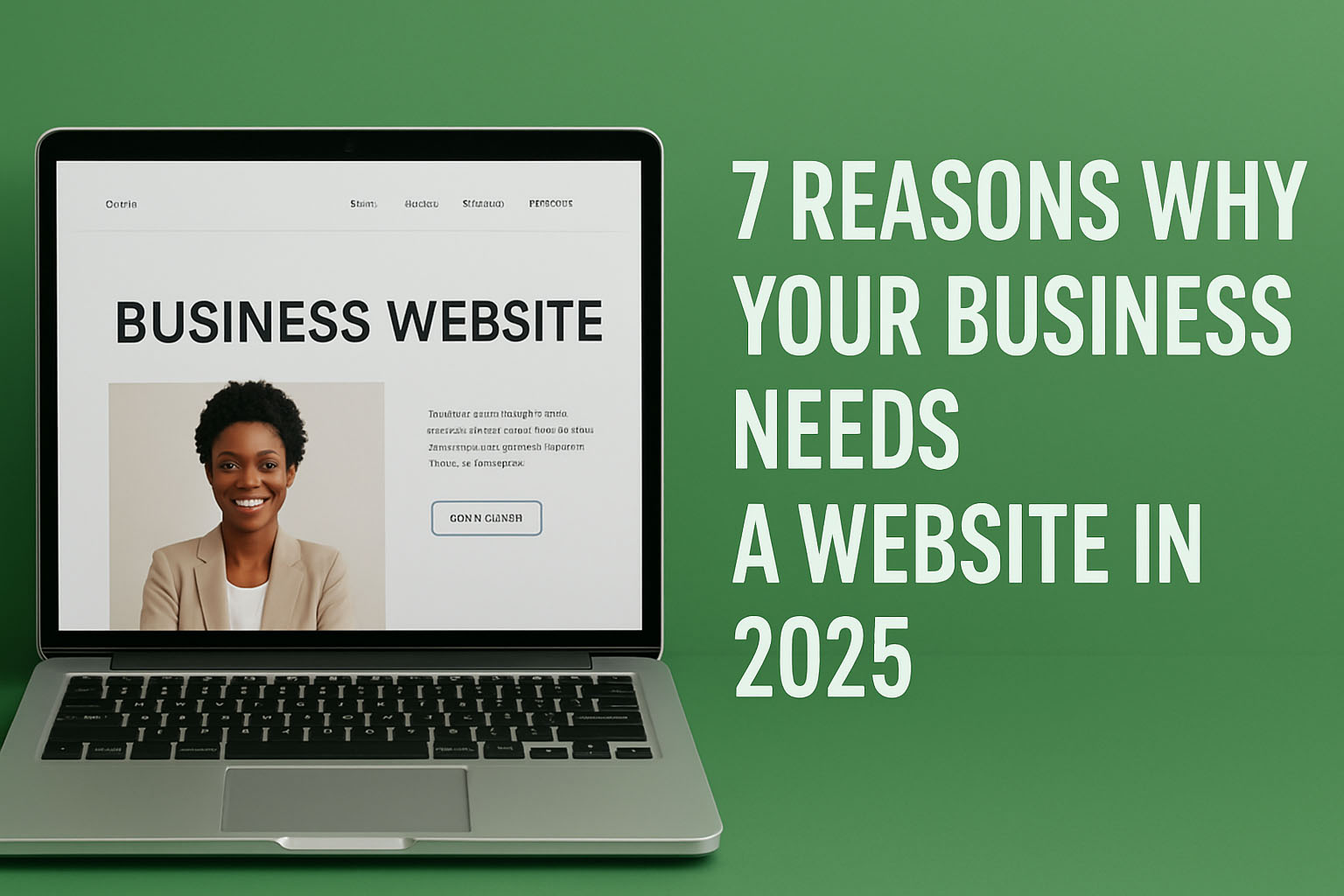
In 2025, the reasons why a business needs a website in Africa are growing more urgent. With increasing internet penetration, a rising digital consumer base, and shifting expectations post-COVID-19, having a website is no longer a luxury—it’s central. For small business owners, startups, and freelancers in Africa, a professional website can mean the difference between surviving and thriving.
Below are seven key reasons, backed by African data and real examples, showing why a business in Africa needs a website in 2025.
Africa’s Digital Landscape: A Quick Overview
To understand why a website matters, let’s look at some context:
- As of early 2025, internet penetration across Africa stood at roughly 39-40%, up from ~28% in 2019. Regions vary widely: Southern Africa is much higher; Central Africa much lower.
Business Tech Africa - The number of internet users is increasing fast. Nigeria has over 107 million internet users, Egypt nearly 96 million.
Statista - Small and medium enterprises (SMEs) are moving online: a GeoPoll / Africa 118 survey of businesses in Nigeria, Kenya, South Africa, and Ethiopia found that 53% of SMEs are marketing online, 45% selling services/products online, and 24% using digital platforms for supply or inventory.
Prime Progress
These figures show a rapidly changing environment. Many customers are now online, and many competitors are too.
1. Establish Credibility & Trust in Local Markets
In many African markets, trust is a major hurdle. Without a website, a business often looks informal, unreliable, or hard to find.
- For example, in Ghana, a report found 70% of small business websites fail to generate meaningful leads. A frequent cause: poor design, long load times, or clunky navigation.
MyJoyOnline - In South Africa, surveys have shown that only about 28% of small businesses had a website (in earlier years), with many relying solely on social media.
Afrikan Heroes
A well-designed, informative website with testimonials, clear contact info, professional imagery etc., can markedly improve trust among prospects who are cautious online.
2. Reach People 24/7, Especially via Mobile
Many African users access the internet via mobile phones rather than desktop—often because mobile networks are more available & less infrastructure-dependent.
- In Nigeria, ~86% of web traffic is from smartphones; fixed-line or desktop access remains much lower.
Statista - The growth in mobile internet and mobile broadband is a foundation of Africa’s digital expansion.
Business Tech Africa+1
Thus, a website gives business exposure beyond working hours, local time zones, and physical constraints. Even when a store is closed, or when the owner is not available, potential clients can learn about services, see portfolios, read contact details, or even make purchases (if e-commerce enabled).
3. Generate Leads and Boost Sales via Digital Channels
African SMEs are adopting online marketing and sales in increasing numbers.
- According to the Africa MSME Survey Report 2023, in Nigeria, Kenya, South Africa, Ethiopia: 45% of surveyed SMEs already sell products or services online; 53% use online marketing.
Prime Progress - The eCommerce market in Africa is forecast to have over half a billion online consumers by 2025, driven by rising smartphone adoption, improved digital payments etc.
Reuters+1
Example: Pargo, a South African “click-and-collect” company, is expanding across Africa, leveraging its online presence plus physical pick-up points to serve customers more conveniently. Its growth shows how combining digital + offline via a trustworthy web interface can open new markets. Reuters
A good website also supports features like pricing info, contact forms, booking, or direct online sales, making lead capture and conversion easier than relying solely on social media DMs or word of mouth.
4. Showcase Brand & Authority in a Crowded Space
As more SMEs and freelancers compete, differentiation becomes important. A website becomes your curated space to:
- Tell the story of your brand
- Show portfolio / past clients / testimonials
- Publish content to educate customers or answer FAQs
Case in point: Afriwork—a freelance / SME support platform in Ethiopia. Their model includes web presence plus tools for matching freelancers with clients and managing payments. The website functions both operationally and as credibility builder. Wikipedia
Another local real-world example might be smaller creative professionals (e.g. designers, writers) using portfolio websites to land clients across cities or countries. Even if clients start via Instagram or WhatsApp, they often check the website to verify work quality, see past clients, or read reviews.
5. Data, Personalization & New Digital Tools
The capacity to collect, analyze, and act on user behaviour is increasingly accessible in African markets.
- Many SMEs now use analytics tools (even free/basic ones) to see which markets or pages drive traffic.
- Chatbots or simple contact forms can automate customer inquiries.
Moreover, localized content helps: websites allow you to structure content in local languages, provide region-specific shipping/payment info, which social media posts (ephemeral, algorithm-driven) often struggle with.
6. Competitive Edge & Future-Proofing in Africa
Some businesses in Africa already lag in having a proper web presence, even if they are doing well. Not having a website positions you behind many competitors, especially those targeting regional or online-savvy markets.
- In Ghana, many SMEs have websites but they are poorly maintained or fail to convert leads. Realizing that having a site is one thing; maintaining and optimizing it is another.
MyJoyOnline - With growing infrastructure investments (internet backbone, cheaper mobile data, more devices), the ability to capture digital consumers will increase. Being early, or upgrading now, gives you an advantage.
Additionally, regulatory/environmental trends (digital payments, mobile money, public services moving online) mean businesses without online legitimacy may lose out or find operations harder (e.g., regarding invoicing, regulatory filings, customer trust).
7. Improve Customer Service and Engagement
In many African markets, customer service expectations are rising. A website can centralize:
- FAQs or support knowledge base to reduce repeated inquiries
- Contact forms / chat options to help customers get assistance faster
- Location / hours / service details clearly, reducing customer confusion
Example: Businesses that have no website sometimes suffer because potential customers can’t verify basic information (address, prices, product types). This leads to lost trust or wasted time. Even a simple website with correct contact info can reduce friction.
Also, with e-commerce or order-taking, being able to show stock, accept payments online, or confirm order status helps build loyalty.
Comparison Table: NO Website vs Website for an SME in Africa
| Factor | No Website | With Website |
|---|---|---|
| Credibility | Viewed as informal; less trust; difficult to verify info | Professional image; verifiable services; customer reviews |
| Reach / Availability | Limited to local, physical hours; social media bounds | Global/local reach; always open; visible even when offline |
| Marketing / Leads | Word-of-mouth / social media only; unpredictable | Inbound leads; SEO & content; lead generation via forms |
| Customer Engagement | scattered communication; inconsistent customer info | Centralized support, clear communication, better UX |
| Competition | Vulnerable to competitors with stronger digital presence | Compete on quality, speed, visibility |
| Data & Improvement | Minimal feedback; guesswork | Analytics + feedback loops; ability to optimize |
Real-World Example: Babban Gona
Babban Gona (“Great Farm”) in Nigeria is a social enterprise that supports thousands of smallholder farmers. While it started with strong community and field operations, its website (babbangona.com) plays an essential role in communicating with investors, farmers, aggregators, and government partners. The site provides information about programs, impact stories, training, and even supports coordination with stakeholders. This online presence helps with organizing, scaling operations, and building legitimacy beyond local communities. Wikipedia
Challenges & How to Overcome Them
It’s important to acknowledge real challenges in the African context:
- Connectivity / Infrastructure: Many rural areas still struggle with reliable internet, data cost, and electricity.
Brookings+1 - Cost & Skills: Building a site is cheaper than ever (using templates, WordPress, etc.), but maintaining good design, speed, security, and SEO requires skill and effort.
- Trust Barriers: Online fraud concerns, delivery/logistics (for product-based businesses), and unclear payment methods affect customer trust.
Solutions:
- Build mobile-friendly, lightweight sites optimized for low bandwidth.
- Clearly display contact info, payment options, testimonials.
- Start small: a landing page + portfolio + contact form; expand as revenue allows.
- Use local domain / hosting where possible; ensure website security basics (HTTPS).
Conclusion & Call to Action
The data is unmistakable: Africa is undergoing rapid digital transformation. For small business owners, startups, and freelancers, a website is no longer an accessory—it’s central to credibility, reach, sales, and future growth.
If you don’t yet have a website, begin planning yours today. If you do, audit it: is it mobile-friendly? Fast? Secure? Does it reflect your brand well? Are there clear ways for customers to contact you, see your work, and buy?